
menu
menu
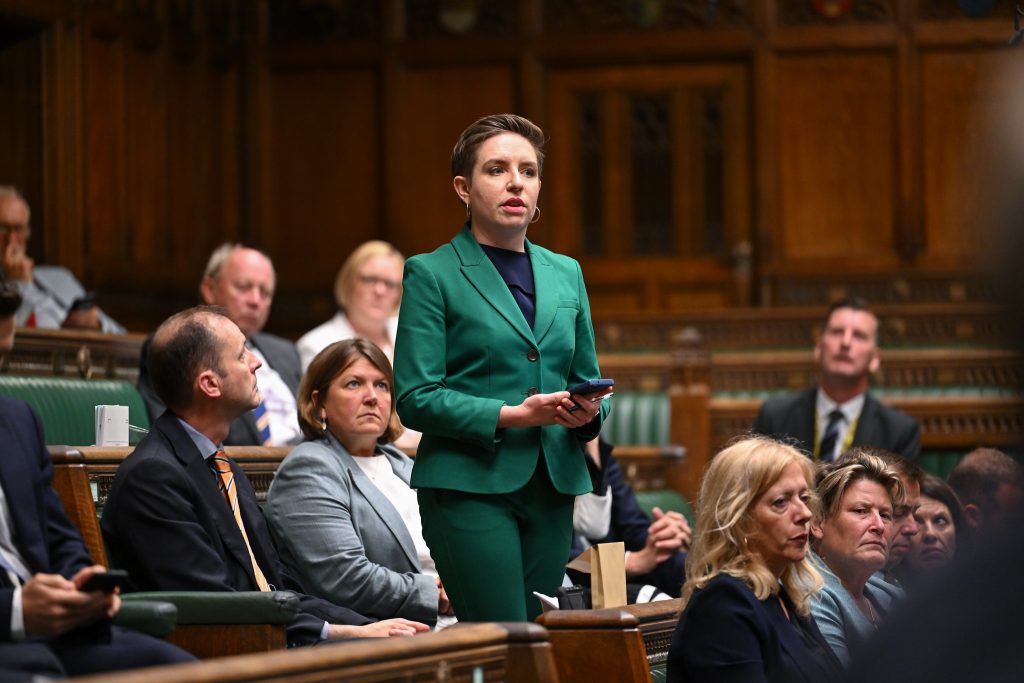
I have written to the Minister for Policing and Crime, Sarah Jones, to ask that the Home Office renew and strengthen the National Hate Crime Action Plan.
You can read the letter in full here:
National Hate Crime Action Plan Apr 26 Sarah Jones MPThe full text of the letter reads:
24 April 2026
Sarah Jones MP
Minister for Policing and Crime
BY EMAIL
Dear Sarah,
Re: Renewing the National Hate Crime Action Plan
I am writing to ask that the Home Office renew and strengthen the National Hate Crime Action Plan,
which has not been updated since its refresh in 2020. This letter follows similar correspondence you
will have received from SARI (Stand Against Racism & Inequality), a specialist hate crime charity
operating in my constituency, which I work with closely.
The profound human, social and economic cost of hate crime is felt daily in my constituency and
across the UK. The absence of an up-to-date national strategy leaves victims, communities, and
frontline agencies without the coordinated leadership required at a time when hate-motivated
incidents are rising and becoming more complex. The Crime Survey for England and Wales
continues to show that hate crime is a significant and persistent problem. Recent estimates indicate
substantial volumes of hate crime each year, with many victims never reporting to the authorities.
Police-recorded hate crime has also been elevated over the past decade, with race-related hate crime
consistently the most common category. While improved recording practices account for some of
the change, the Home Office also notes genuine increases in hostility behind these trends.
We are also witnessing a concerning rise in extreme right-wing activity, rhetoric, and mobilisation.
The UK’s security agencies continue to warn about extreme right-wing terrorism as a stubborn and
evolving threat, whilst civil society and think-tanks highlight the role of online radicalisation,
conspiracy-driven narratives and dehumanising language towards minority groups. The UK is not
alone. Around the world, hate-motivated violence and extremist rhetoric have surged, driven by
geopolitical tensions, online radicalisation and polarisation. Recent global events illustrate the
urgency, from the 2025 Bondi Beach attack in Sydney to the racially motivated riots in summer
2024 here in the UK. Transnational online extremist ecosystems amplify and spread harmful
narratives across borders, demanding a coordinated response that includes regulation, platform
accountability and digital literacy.
The UK has learned painful lessons from tragic cases that exposed institutional failings and the
consequences of not acting early. Many cases demonstrate how hate crimes can escalate into
extremism when early warning signs are missed, from the murders of Bijan Ebrahimi and Kamal
Ahmad Ali in Bristol; the deaths of Fiona Pilkington and her daughter Francecca following years of
disability-related harassment; and cases such as Mohammed Saleem, Lee Rigby and the Finsbury
Park mosque attack.
The 2016–2020 National Hate Crime Action Plan provided a valuable framework for improving
reporting, supporting victims, and building community resilience. However, the landscape has
changed dramatically since 2020 — including the pandemic’s unequal impacts, heightened
polarisation and online hate, rising antisemitism and Islamophobia linked to international conflicts,
growing hostility toward migrants, asylum seekers and refugees, and increased targeting of
LGBTQ+ communities.
A refreshed National Hate Crime Action Plan is now needed to reaffirm the UK’s commitment to
tackling all forms of hate crime. I recognise that the government has recently published its
Protecting What Matters Community Cohesion Strategy and Action Plan, but key provisions are not
included in this.
A new National Hate Crime Action Plan must:
I would be very happy to discuss this matter with you further, or to put you in touch with SARI, who
stand ready to support the Home Office in this work.
Yours sincerely,
Carla Denyer MP
Member of Parliament for Bristol Central